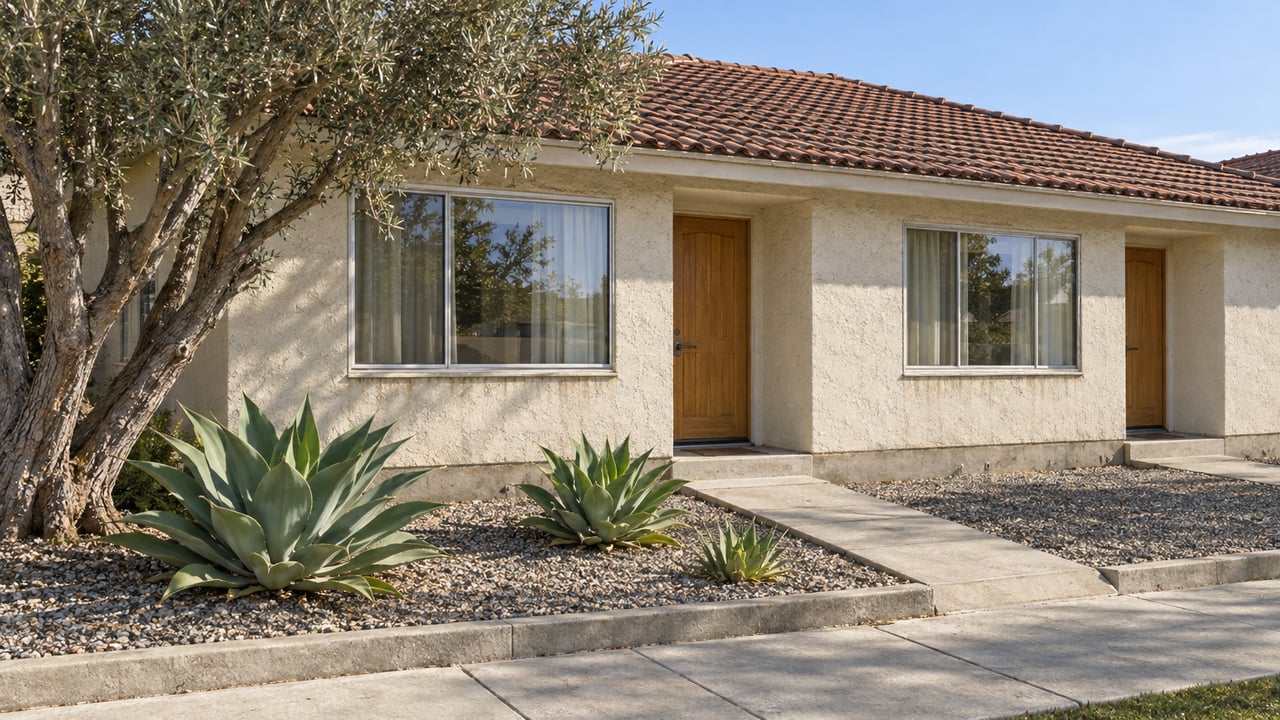
Picture two San Pedro duplexes on the same block with the same rents. One got its certificate of occupancy in the summer of 1978. The other was finished a few years later. For a lease renewal this year, the older building can raise rent by 3%. The newer one, if California's statewide rent cap covers it, can raise rent by up to 8.7%. The difference comes from the building's construction date.
That gap opened on February 2, 2026, when Los Angeles' rewritten Rent Stabilization Ordinance took effect. If you are underwriting a small income property in San Pedro this fall, the construction date now belongs near the top of the offering memo. It shapes income growth for as long as you hold the building.
The RSO generally covers rental units first built on or before October 1, 1978. That includes duplexes and parcels with two or more single-family homes on them. Units built after that date fall outside the city ordinance. Many of them fall under California's Tenant Protection Act instead, which generally applies to rental housing more than 15 years old.
Here is how the two tracks compare as of this month:
| City RSO | State Tenant Protection Act | |
|---|---|---|
| Who it covers | Units built on or before Oct. 1, 1978 | Most rentals more than 15 years old, subject to exemptions |
| Formula | 90% of average CPI, 1% floor, 4% ceiling | 5% plus the change in cost of living, 10% maximum |
| Current figure | 3%, July 1, 2025 through June 30, 2027 | 8.7% in LA County for increases starting Aug. 1, 2026 through July 31, 2027 |
| Prior figure | 3% | 8% for increases starting Aug. 1, 2025 through July 31, 2026 |
The RSO side comes from the LA Housing Department's allowable rent increase bulletin. The state side comes from the California Attorney General's rent cap chart.
Put dollars on it. A unit renting for $2,500 a month can go up $75 at renewal under the RSO's 3%. A covered unit under the state's 8.7% maximum can go up as much as $217.50. The state figure is a ceiling, and the market decides whether a tenant will pay it. Still, the gap repeats every year you own the building, and each year's increase compounds on the last.
Plenty of San Pedro income-property spreadsheets still run the formula Los Angeles used for decades. Under that formula the RSO increase tracked 100% of regional CPI, with a 3% floor and an 8% ceiling. Owners who paid all of a building's gas or electricity could add 1% for each utility, for a maximum of 10%.
The City Council voted 12–2 on November 12, 2025 to replace it, KTLA reported. It was the first overhaul of the ordinance in more than four decades. The record is Council File 23-1134. As of February 2, 2026, the rewrite made four changes that hit an older building's income line:
The utility change matters most to anyone buying an older San Pedro building where the owner pays the gas or electric bill. Under the old rules that cost came with up to two extra points of annual increase. Now the owner pays the bill and gets nothing back on the rent. A seller's rent roll built under the old math can describe growth the new rules no longer allow.
This would matter less if pre-1978 buildings were rare. In San Pedro they make up most of the housing. The Census Bureau's 2024 American Community Survey five-year estimates count 24,423 housing units in ZCTA 90731. About 18,371 of them, or roughly 75%, were built before 1980.
Treat that as an estimate and a proxy. The Census groups construction years by decade, so its 1980 cutoff doesn't line up with the RSO's October 1978 date. The count includes owner-occupied homes as well as rentals, and a ZCTA doesn't exactly match the postal ZIP. Even so, most of the duplexes, triplexes and fourplexes that come to market here are likely to be RSO buildings. The newer buildings that run on the faster track are the minority, and listings that mention the construction date are worth reading closely.
The newer side has fine print too. The state cap's new-construction exemption rolls forward each year, so a building becomes covered once it is more than 15 years old. A single-family home or condo can be exempt only if it isn't owned by a REIT, a corporation or an LLC with a corporate member, and the tenant receives the required written exemption notice. That exemption doesn't apply when another dwelling sits on the same lot. A two-unit property is exempt only if the owner lives in one unit for the entire tenancy. The City and County of San Francisco's official Tenant Protection Act summary lays out these conditions. A newer duplex that qualifies for one of those exemptions may not be under the 8.7% cap at all.
On an older building, a slow annual increase pushes more of the value onto turnover. Both the city and the state allow rent to reset when a unit changes hands under certain conditions, and the conditions decide whether any upside exists.
LAHD's bulletin says an owner may set any rent after a voluntary vacancy. It lists three other reset cases: eviction for nonpayment of legal rent, an uncured violation of the rental agreement, and a compliant tenant buyout. The same bulletin says rent must stay at its prior level after other kinds of vacancy, such as a unit vacated for owner, family or resident-manager occupancy. At the state level, Civil Code section 1954.53 generally lets an owner set the opening rent for a new tenancy. It bars that reset where the prior tenancy ended because of the owner's termination notice.
Some of that history can transfer to the buyer:
How each unit came to its current rent and its current tenant is part of what you are buying.
Once escrow closes, a few items become the new owner's job:
The RSO increase is calculated from the CPI average for the 12 months ending September 30. That window closed last month, so the inflation data behind the July 2027 increase is already fixed. LAHD hasn't yet posted a rate for July 1, 2027 through June 30, 2028. The department says it will continue to publish the annual figure. Under the new formula, that figure will fall between 1% and 4%. For a buyer closing on an older San Pedro building this winter, LAHD's published rate is 3% through June 2027, and the rate after that hasn't been announced. Use the LAHD bulletin as the reference. The department's online calculator still shows the 2025–26 period in its headline.
Does the RSO apply in San Pedro, or only in central Los Angeles? It applies citywide, and LAHD's registration bulletin names San Pedro specifically.
Is the AG's chart the right place to check the Los Angeles RSO formula? Use it for the state cap. The local-ordinance section of the same page still shows LA's old 3% to 8% range, so check the city's current rule against LAHD.
Roughly how many units does the RSO cover citywide? LAHD put the figure at about 624,000 units in 118,000 properties as of March 2026.
This post is general information about rules that apply to rental property. It isn't legal, tax or financial advice, so confirm how they apply to a specific building with a real estate attorney, CPA or LAHD before you make an offer or set a price.
If you own an older San Pedro duplex or fourplex and want to know how buyers will price it under the 2026 rules, or you're weighing a pre-1978 building against a newer one, Gary Krill and Krill & Associates can go through the rent roll, the construction date and the LAHD history with you before the building goes to market.
Browse active listings in the area or contact us for off-market listings.
Have an expert help you find out what your home is really worth.
Gary has a true passion for the real estate business and prides himself on staying up to date on current market conditions, latest real estate trends, and innovation that can help him and his clients to be more successful when working together.